
DESIGN CONVERSATIONS • NO. 11
Studying the work of Charlie Barnett, AIA.
Restraint is often mistaken for simplicity. It isn’t. Simplicity can be achieved by removing things. Restraint is achieved by deciding what deserves to remain.
Spend time studying the work of Charlie Barnett and this distinction begins to emerge. The architecture never feels incomplete, yet almost nothing appears excessive. Every decision seems to have survived careful editing. Every element has a purpose. Every material belongs.
The buildings don’t ask to be noticed because they are louder than their surroundings. They ask to be noticed because they feel resolved.
RESTRAINT CREATES CLARITY
Barnett’s projects rarely rely on dramatic forms or expressive gestures to establish their identity. Instead, the architecture gains strength through discipline. Rooflines settle naturally into the landscape. Windows frame rather than dominate. Materials support one another instead of competing for attention. Nothing appears to have been included simply because it could be. That restraint doesn’t reduce the richness of the architecture. It concentrates it.
Every remaining decision carries greater significance because it no longer competes with unnecessary ones.
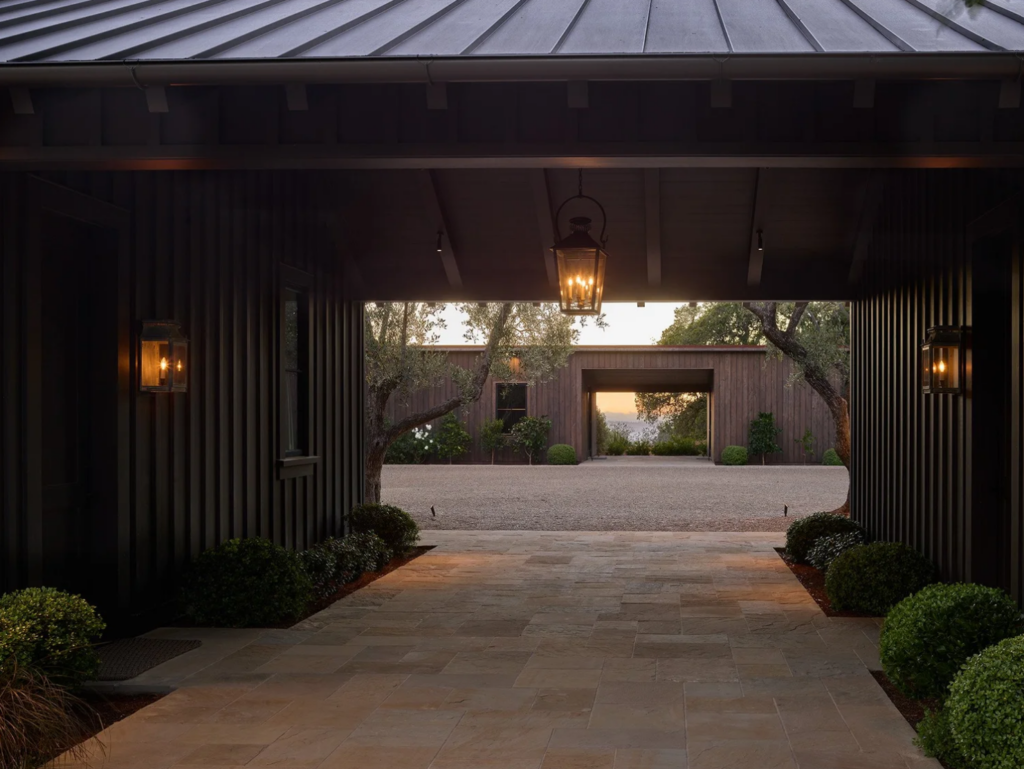


EVERY OPENING HAS A PURPOSE
Windows don’t simply admit light. They compose experience. Throughout Barnett’s work, openings rarely feel interchangeable.
Some compress your view before expanding it. Others frame a single oak with almost photographic precision. Large sliding walls dissolve entirely, while smaller punched windows become moments of focus rather than sources of daylight alone. The remarkable quality isn’t the amount of glass. It’s the restraint. Every opening feels intentional. Nothing feels arbitrary.
MATERIALS ENDURE
The material palette throughout Barnett’s portfolio feels remarkably confident. Wood is allowed to weather. Stone carries its natural variation. Steel is used with restraint rather than spectacle. Nothing feels selected to establish a trend or create a memorable photograph. Instead, the materials contribute to a larger sense of permanence.
The architecture becomes quieter because the materials are trusted to speak honestly.

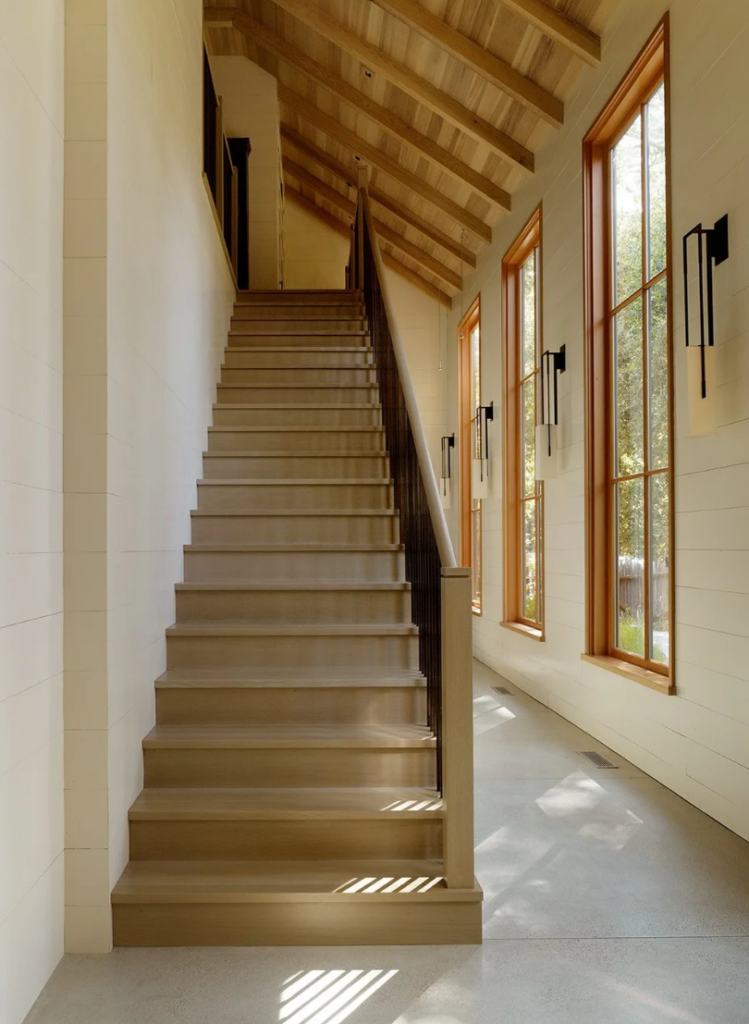
CALM IS CONSTRUCTED
One of the easiest qualities to underestimate is calm. Yet calm rarely happens accidentally.
It is the cumulative result of proportion, editing, sequencing, material selection, and countless decisions that quietly reinforce one another.
Barnett’s work demonstrates that architecture doesn’t become more compelling by adding complexity.
It becomes more compelling when every decision supports the same idea.
The result isn’t minimalism.
It’s coherence.
WHERE CONSTRUCTION MATTERS MOST
Restraint is one of the easiest qualities to admire and one of the hardest to protect.
Architecture that depends on careful proportion, disciplined detailing, and measured composition leaves very little room for casual decisions during construction. Every alignment, every reveal, every transition, and every material junction contributes to the clarity the architect worked to achieve.
Builders become stewards of that clarity.
Our role isn’t simply to execute drawings accurately. It’s to protect the discipline behind them—to ensure that the restraint evident in the design remains evident in the finished building.
Construction doesn’t create that restraint. It preserves it.
A Question Worth Asking
Where has the architect intentionally chosen not to make a statement?
Those decisions often require the greatest confidence.
ABOUT DESIGN CONVERSATIONS
Design Conversations is an ongoing editorial series within The Homestead Journal exploring the enduring ideas shaping residential architecture. Each issue studies the work of a leading architect, designer, or craftsperson; not to document projects, but to better understand the principles that influence how exceptional homes are conceived, experienced, and ultimately built.