
OBSERVATIONS ON GOOD BUILDINGS · NO. 09
The strongest homes don’t introduce new ideas from room to room. They develop a language and remain faithful to it.

Recognition Is Built Through Repetition
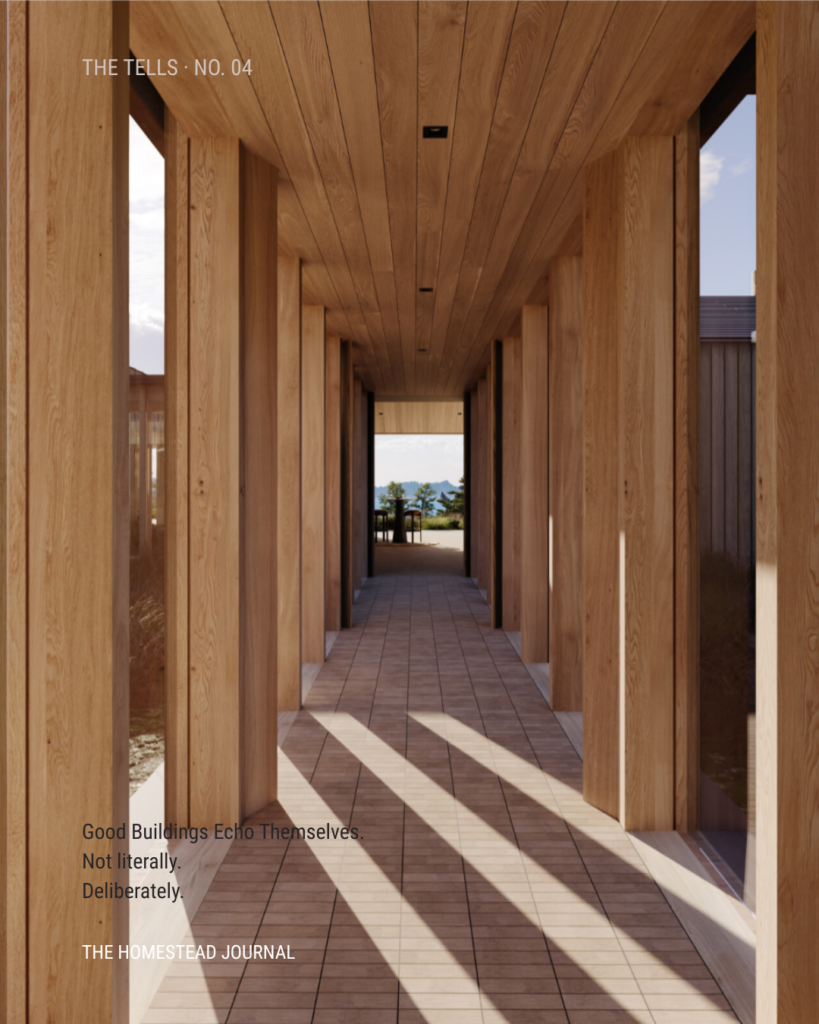
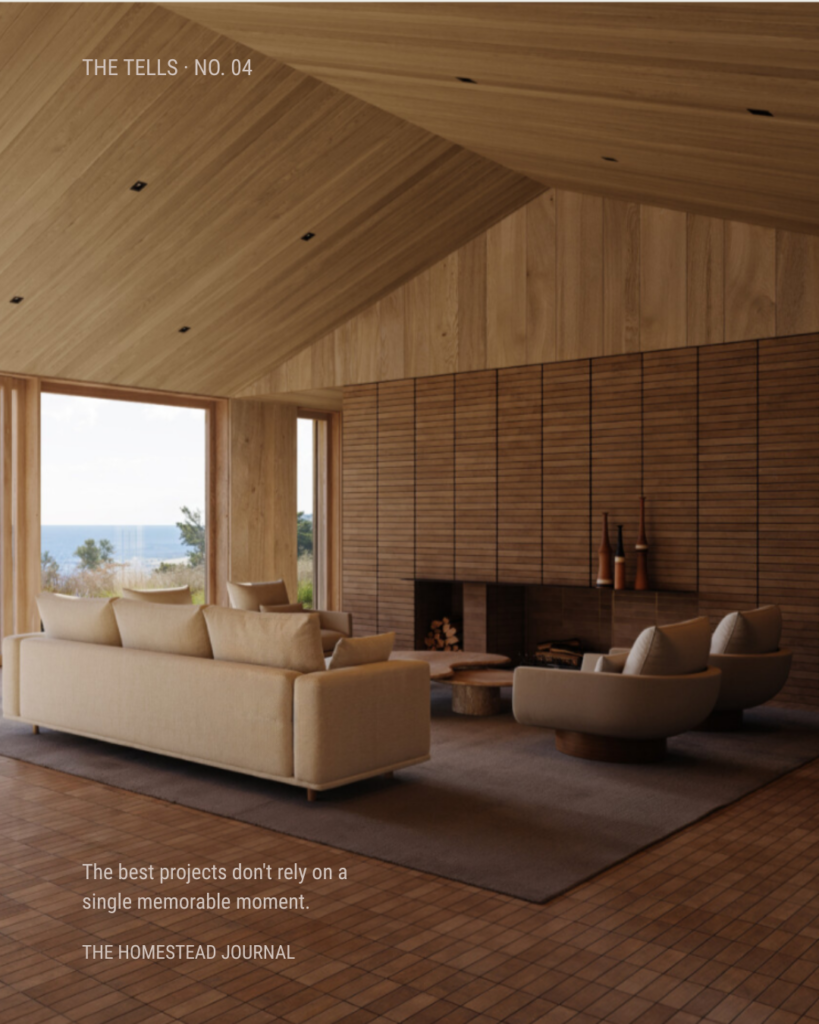
Every architect develops a vocabulary. Proportions. Materials. Joints. Openings. Light. When those decisions remain consistent throughout a project, something begins to happen.
The building becomes recognizable. Not because every room looks the same. Because every room speaks the same language.
Cohesion Is Invisible Until It’s Missing
People often describe these homes as calm. Or effortless. Or timeless. What they’re responding to isn’t simplicity. It’s consistency.
Nothing is competing for attention. Each decision quietly supports the next. No single room has to carry the project because every room contributes to the same idea.
Builders Read Echoes Differently
As builders, repetition means something practical. When the same logic governs every decision, construction becomes more predictable. Details begin to solve other details. Materials transition naturally. Trades understand expectations before they’re explained.
Consistency isn’t only aesthetic. It’s operational.
The projects that feel effortless to live in are often easier to build because the design never argues with itself.

WHY THIS MATTERS
Good architecture rarely depends on a signature moment. It depends on disciplined restraint. The willingness to repeat an idea after discovering it is good. The confidence to say the same thing in multiple ways.
Buildings don’t become memorable by collecting great moments. They become memorable when every decision reminds you that you’re still in the same story.
A Question Worth Asking
If one room disappeared from this house, would the others still feel like they belong together?