
THE TELLS · No. 04
Some buildings impress you immediately. Others slowly convince you they know exactly what they are.
The difference isn’t beauty. It’s recognition.
Within moments of entering an exceptional home, something subtle begins to happen. You don’t simply observe the architecture, you begin to anticipate it. Before you’ve seen every room, you already have a sense of how the next one will feel. Not because the spaces repeat themselves, but because they share the same logic.
The building is teaching you how to read it.
That quiet phenomenon is what we call Architectural Recognition.
A Building Teaches You Its Language
Every project begins with a handful of decisions that matter more than all the others.
How should light move through the house? Should the architecture feel restrained or expressive? Are openings meant to frame the landscape or dissolve into it? How much contrast should exist between materials?
These aren’t isolated design choices. Together, they establish the building’s way of thinking. From that point forward, every drawing, every detail, and every construction decision has a simple responsibility to continue the conversation.
The best architecture doesn’t keep inventing itself. It keeps becoming more completely itself.
Recognition Is Built Through Relationships
Most people assume a memorable home is the result of memorable moments. A dramatic staircase. A remarkable kitchen. A wall of glass overlooking the landscape.
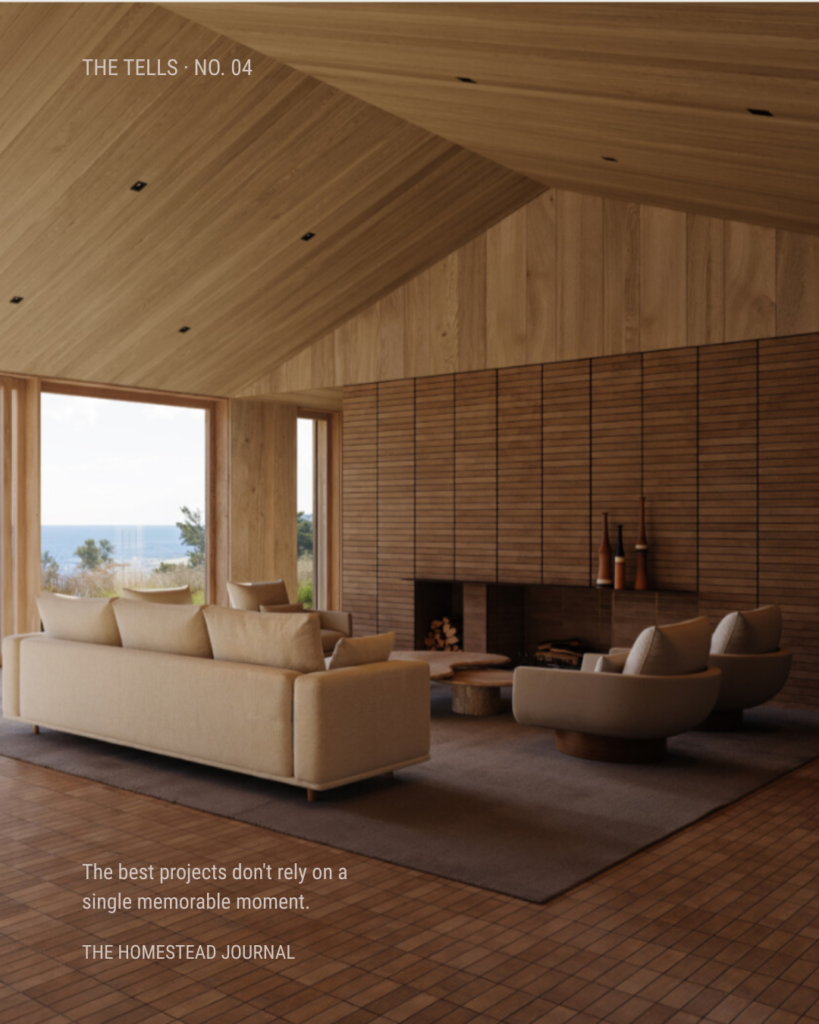
Exceptional projects work differently. No single room carries the architecture. Each room quietly prepares you for the next. The proportions you noticed at the entry return in the hallway. The restraint in the material palette continues in the cabinetry. The rhythm of the structure reappears in the windows. The same attitude toward light follows you throughout the house. Nothing feels copied. Everything feels related. The building earns your trust because every decision confirms the one before it.
Projects Rarely Lose Quality Overnight
They lose Architectural Recognition. Usually one reasonable decision at a time. A different window profile because of lead times. A revised trim detail to simplify installation. A substituted light fixture. A ceiling adjusted around ductwork.
None of these decisions are automatically wrong. The problem begins when they stop speaking the same architectural language. One change becomes two. Two become twenty. Eventually, the building no longer feels unresolved because of any single decision. It feels unresolved because its internal logic has become difficult to recognize. People often describe these homes as feeling “almost right.”
What they’re actually noticing is the disappearance of Architectural Recognition.
The Quiet Work of Stewardship
Protecting recognition isn’t the architect’s responsibility alone. It becomes the responsibility of everyone who touches the project. Consultants. Fabricators. Cabinetmakers. Builders.
Each decision either strengthens the architectural language or introduces a different dialect. This is why the most important conversations often happen long before construction begins.Not to preserve perfection.To preserve coherence.
Architecture survives through stewardship.
A Tell Worth Looking For
The next time you walk through a home you admire, pay attention to when you stop looking for impressive moments. Instead, notice when you begin trusting the building. Notice the moment when each room feels connected to the last. When every material seems to understand why it’s there. When every transition feels expected, not because it’s predictable, but because it belongs. That’s one of the quiet tells of an exceptional project. The building has taught you how to read it. And every decision you’ve encountered has confirmed that you were reading it correctly.
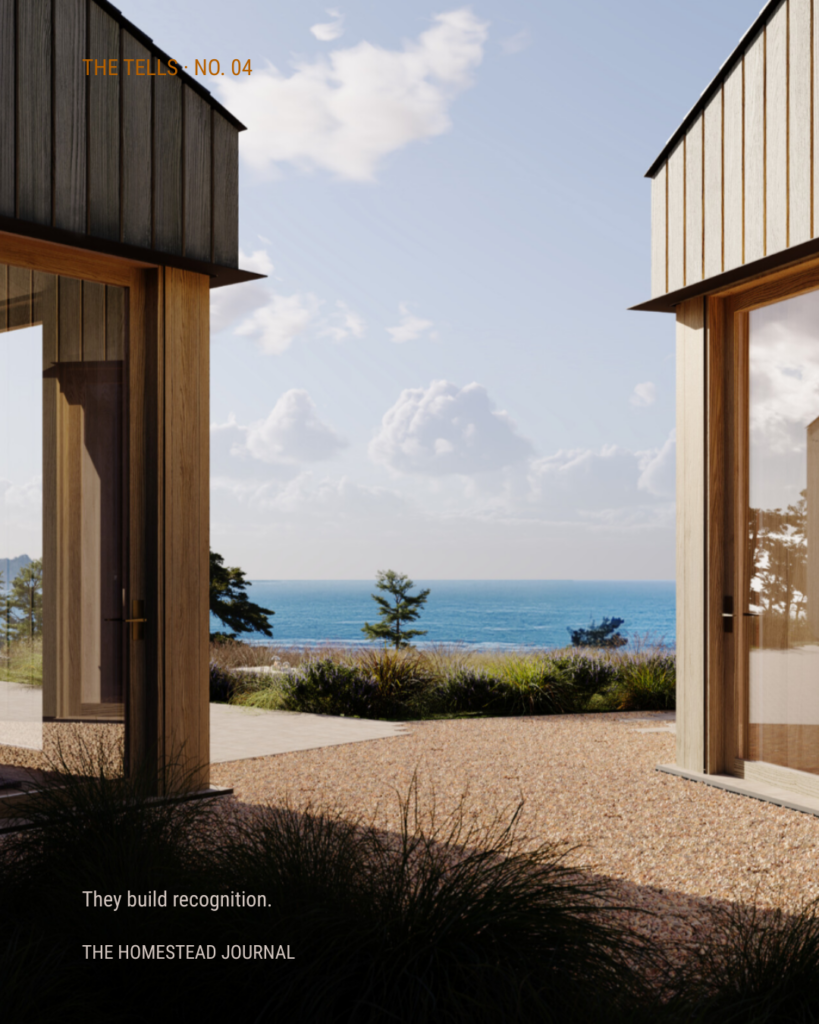
PROJECT CREDIT: WALKER WARNER ARCHITECTS
CONTINUE THE CONVERSATION
Continue exploring What Great Builders Do Differently
Continue exploring Evidence of Standards
Continue exploring Dissect the Specs