
OBSERVATIONS ON GOOD BUILDINGS · No. 03
Great homes aren’t defined by how much they contain, but by how carefully everything earns its place. There is a particular moment in almost every project when someone asks: What else? What else should this room do? What else should we add here? Could this space be larger? Should this wall have something on it? More is an easy direction for a project to move. Another material. Another feature. Another few feet. Another idea worth preserving because, considered on its own, it is a good one. The harder question is whether the project needs it.
Good ideas are not the problem
Most projects don’t become complicated because people make obviously bad decisions. They become complicated because too many good decisions survive.
The beautiful stone makes sense. So does the millwork. The dramatic light fixture is compelling. The larger opening would be wonderful. The additional cabinetry could be useful. There is a strong argument for each of them.
But a home isn’t experienced one decision at a time. Eventually, all of those decisions have to live together. And that is where editing begins. Editing isn’t the removal of things that aren’t good enough. Often, it is the removal of something quite good in service of something better.
Every room has to earn its place
We tend to treat square footage as inherently valuable. A larger kitchen. A larger primary suite. Another sitting room. More storage. Another bedroom. A little more space here, because while we’re doing the work, perhaps we should.
But more space doesn’t necessarily create a better home. Sometimes it simply creates more distance between the things that matter. A room can be generous without being large. It can feel expansive because of proportion, light, circulation, connection to the landscape, or the way one space opens into another. And a very large room can still feel unresolved.
Square footage cannot compensate for unresolved thinking. The question isn’t how much space a house contains. It’s what that space does.
RESTRAINT IS NOT MINIMALISM
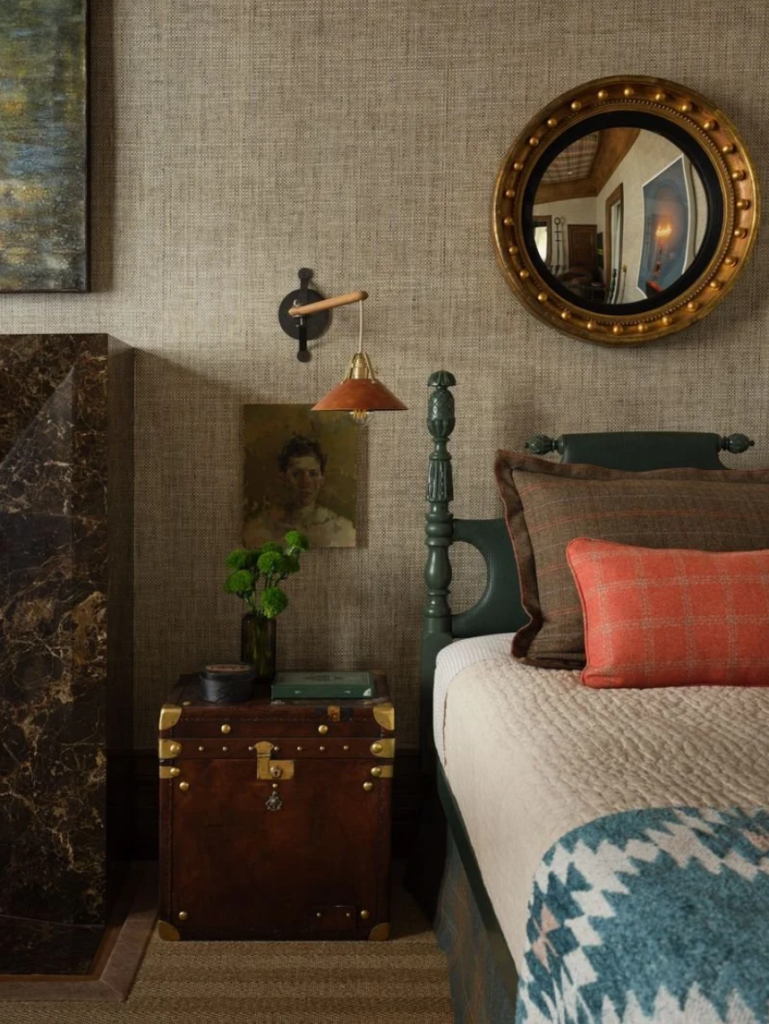
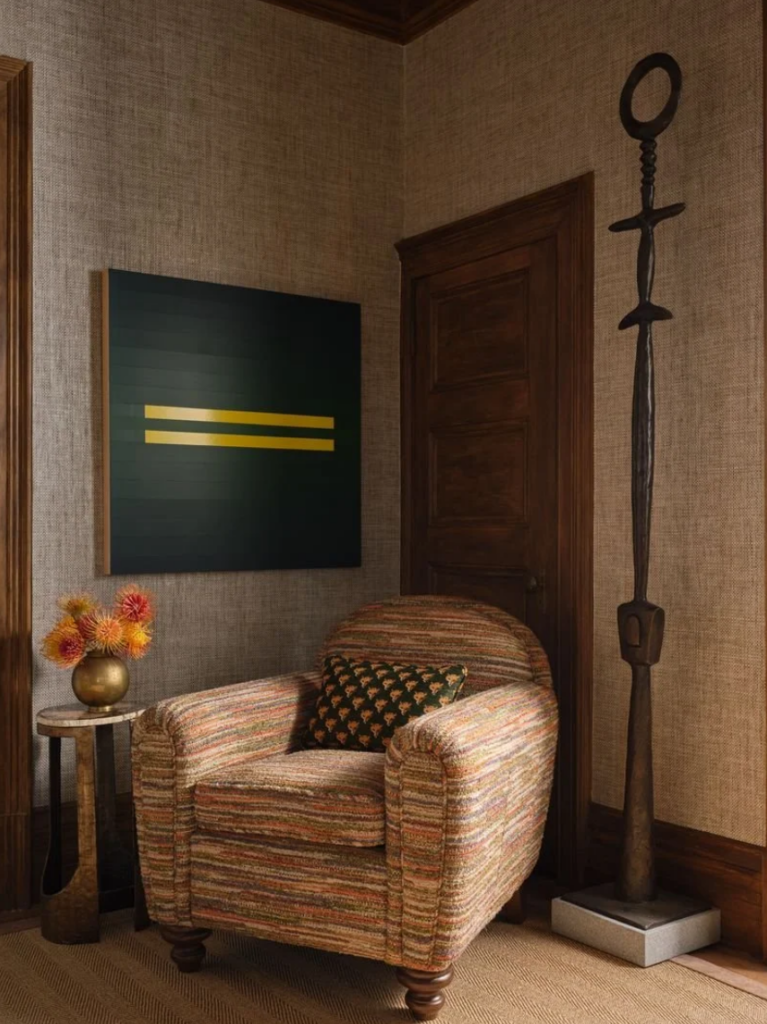
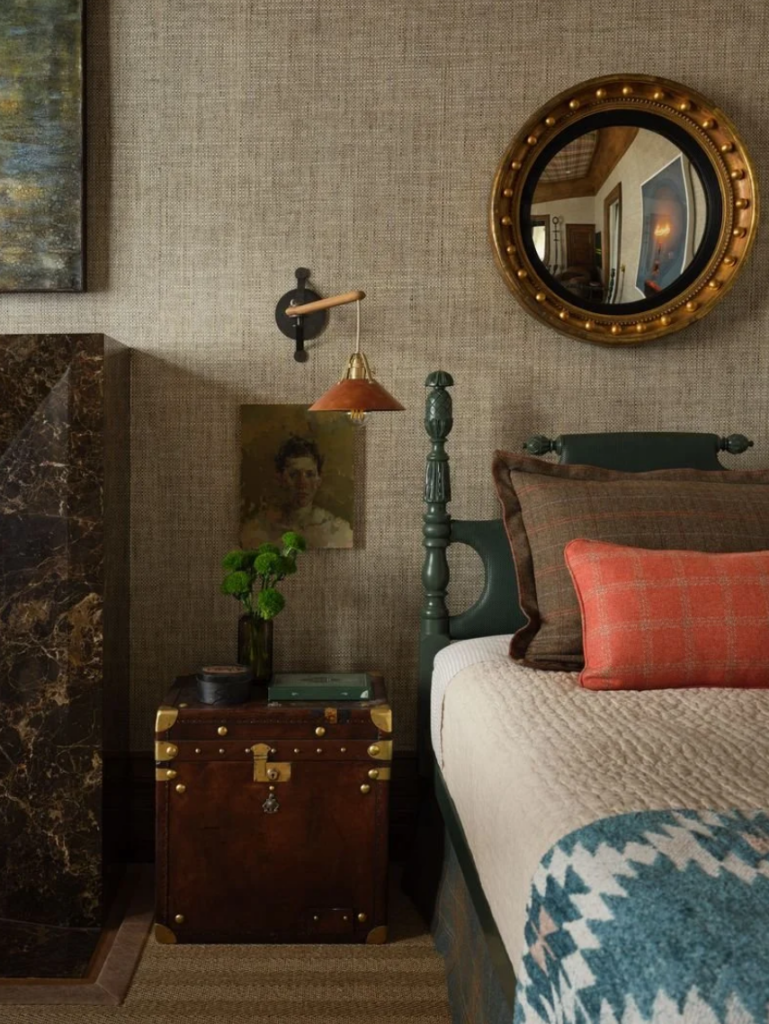
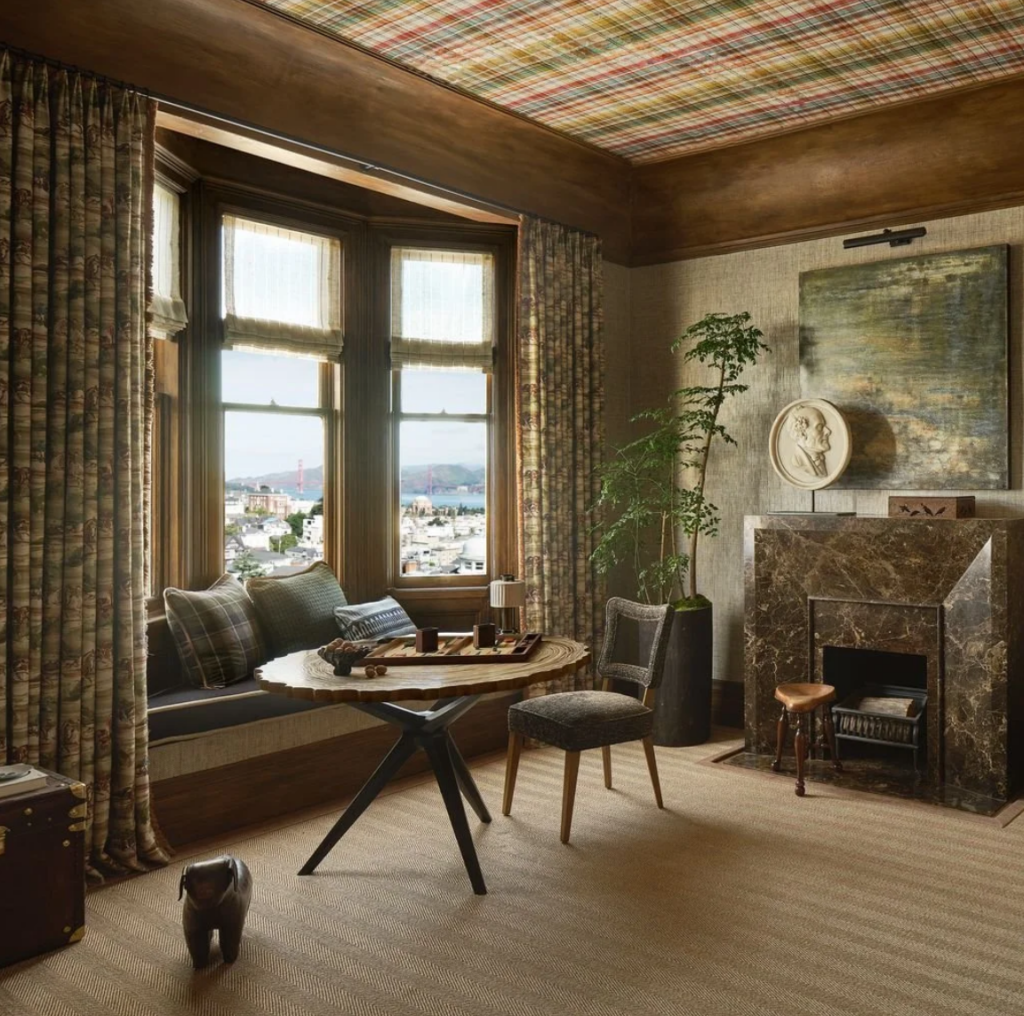
Restraint is sometimes mistaken for an aesthetic. White walls. Few objects. Quiet materials. Nothing unnecessary. But restraint has very little to do with how minimal a room appears. A richly layered interior can be restrained. So can a traditional house filled with pattern, color, ornament, and collected objects. Restraint is not about having less. It is about knowing why something is there.
A material can be expressive without competing with everything around it. A room can contain several ideas without asking each one to become the focal point. A house can have personality without every surface participating in the conversation.
The best projects establish a hierarchy. Some moments speak. Others support them. And some are deliberately quiet.
PROJECT CREDITS
Interior Design: Jeffrey Neve
Photographer: Brad Knipstein Photography
Location: SF Design Showcase 2026
Good taste is mostly editing
Taste is often treated as the ability to identify beautiful things. We think the more difficult skill is knowing which beautiful things belong together. And which one doesn’t belong at all. Because at a certain level, the choices are rarely between good and bad.
They’re between good and good. Two beautiful stones. Three excellent fixtures. Several compelling ways to detail the same opening. More than one material that could work. The question becomes less:
Is this beautiful? And more: Does this make the project better?
Those are not the same question. One asks us to judge an object. The other asks us to protect the whole.
Construction has its own version of restraint
Editing doesn’t end when the drawings are finished. Projects continue to present opportunities during construction. A condition is uncovered. A detail could be changed. A material becomes unavailable. Someone sees another way to build something. An idea appears in the field that wasn’t considered six months earlier.
Some of those discoveries make the project better. Others simply make it different. Knowing the difference matters. The goal of construction isn’t to keep adding our fingerprints to a project. It is to understand what the project is trying to become well enough to know when intervention improves it, and when the best decision is to leave a good decision alone. That requires judgment. It also requires restraint.
Why This Matters
Renovation creates an unusual opportunity to reconsider almost everything about a home. That opportunity can easily become an obligation to change everything. It isn’t.
Some rooms don’t need to become larger. Some materials don’t need to be replaced. Some walls don’t need a feature. Some good ideas don’t need to make it into the project. The goal isn’t to extract the maximum amount of design from every square foot. It is to make the decisions that allow the home to become more coherent, useful, durable, and distinctly itself.
Sometimes that means adding something. Sometimes it means knowing when you have enough.
A Question Worth Asking
If we removed this from the project, would the house lose something important or would the idea simply be gone?
The difference is worth understanding.
The most successful homes don’t feel edited. They feel inevitable. You don’t walk into the room and think about all the things that aren’t there. You simply understand the room. The proportions feel right. Materials relate to one another. There is somewhere for the eye to rest. The important moments are allowed to be important because they aren’t competing with ten others. Nothing feels missing. Nothing feels excessive.
That kind of simplicity can be deceptive. Because arriving at enough often requires considering far more than what ultimately remains.
Perhaps that is one of the quiet distinctions between a house filled with beautiful things and a beautiful house. One is the accumulation of good decisions. The other knows which ones to keep.